
Why Agents Aren't Tools
You use a tool, you direct an agent.
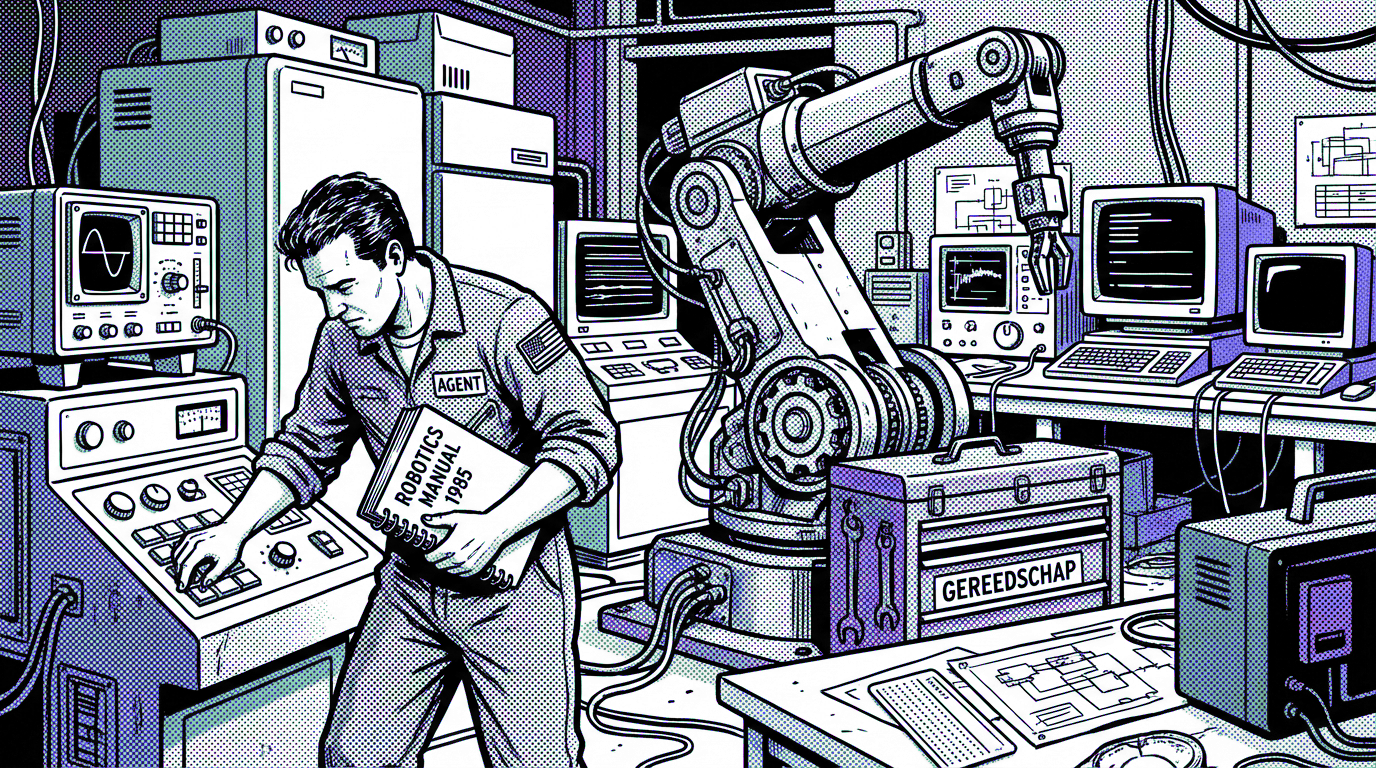
Most organizations treat AI agents as faster tools. That’s a fundamental misconception.
A tool is something you do something with. An agent does something for you. That sounds like a small difference, but it changes everything: the architecture, the governance, the error handling, and above all the way you think about reliability.
Tool thinking
When an organization deploys an “AI tool”, people think in terms of input and output. You put something in, you get something out. The human stays the operator.
But an agent isn’t an operator model. An agent is a delegation model. You give it intent, not an instruction. The agent decides on the steps, the order, the error handling and often even the scope.
What this means for architecture
If agents aren’t tools, then classic API integration isn’t the right pattern either. Instead you need:
- Intent interfaces instead of command interfaces
- Observability instead of logging
- Guardrails instead of validation
- Feedback loops instead of error handling
The consequence
Organizations that deploy agents as tools end up with fragile systems that are expensive to maintain and disappointing in outcome. Not because the technology doesn’t work, but because the mental models don’t fit.
The first step toward agent-native work isn’t technical. It’s conceptual: understanding that you haven’t been handed a faster hammer, but a new colleague.